WhyElderLaw
How would you explain elder law to someone who is unfamiliar with the law?
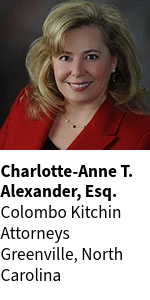 Elder law is a practice that compels attorneys to use all the tools and protections of state and federal law, as well as employ creative, practical solutions, to benefit older adults and their loved ones. The goal is to help enshrine the older adult’s own decisions but also provide tools and learned counsel to assist loved ones and caregivers navigate the journey in the most efficient and compassionate way possible.
When did you know you wanted to become an elder law attorney?
I spent about 12 years as a legal aid attorney in Eastern North Carolina, serving as the office’s managing attorney, but also carrying a significant litigation caseload focused largely on high-conflict custody and domestic violence cases. I enjoyed the work, but I began to see signs of burnout and knew I needed to change course. I felt like I was constantly managing chaos and was not fully satisfied with solutions.
Taking a break from litigation, I threw myself into the office’s senior law project. I found that I loved the work and thoroughly enjoyed working with older adults. I also enjoyed working cooperatively, rather than adversarially, with caregivers and gerontology professionals to support positive outcomes and prevent, or at least mitigate, harm.
Elder law offered so many opportunities to create individually appropriate solutions that made people’s lives easier, gave them peace of mind, and saved them money down the line. The professional community was incredibly collegial, and clients appreciated the legal help as well as having someone who genuinely listened to them and explained solutions clearly. The experience really turned the lightbulb on for me, and I have never looked back.
How has elder law grown as a field during the time you have been in it?
Like many areas of the law, elder law is intrinsically dynamic. Of course, you are dealing with federal and state laws while simultaneously navigating a lot of regulatory overlay, and you also must take into consideration local practices, both with the courts and social service agencies. Many aspects of the practice are in constant flux, and you never have the same day at the office.
And of course, the field is growing because the target client demographic is expanding along with the aging population. With this growth in the potential client base and the unique needs of older adults, it seems that traditional estate planning and probate practitioners may be expanding their more siloed focus to include elder law.
From when I first started in this field in 2005 until now, the practice has grown. My impression is that elder law used to be something of a niche area, but it is much more widely known and mainstream today. Despite a growing pool of legal talent, we are still grappling with far too few resources relative to the need. Having someone like an elder law attorney who can help you navigate the complexities, preserve your options and assets, and provide good solutions is crucial. It’s a wonderful field for attorneys to consider.
What do you consider to be some of the most pressing issues in elder law today?
We need more sensible solutions that support a home-based care model rather than the current inclination toward facility-based care. Most clients want to remain at home for as long as possible. It is often less expensive to maintain someone in their home than to place them in a facility, where they may not receive the same level of attention or comfort. For many older adults with cognitive decline, leaving a familiar environment may exacerbate that decline; of course, I am assuming that the familiar environment is a safe one with opportunities for social interaction.
I would like us to really look at this issue and ask: If we are going to allocate X dollars for an older adult, how can we keep them at home safely for the same amount of money? I also would like us to look at estate recovery. Does it truly make sense? Are we actually gaining anything by appropriating modest assets from mostly middle- and low-income families? My impression is that the funds attained via estate recovery programs are largely eclipsed by the costs of the programs. In other words, is the juice really worth the squeeze? I certainly don’t think so.
It would be wonderful to see an increase in the Medicare long-term care benefit. President Obama tried to do this with the Affordable Care Act, but it was deemed too expensive and cut. There seems to be little political leadership focused on meaningful, bold solutions to address growing elder care needs. In part, it’s a numbers game, because most of the solutions cost money and yet the One Big Beautiful Bill Act cut roughly a trillion dollars from Medicaid over the next 10 years. Those cuts will reverberate in myriad ways, undermining an already inadequate resource framework and making it even hard for elder law attorneys to find good solutions for clients.
So, we have a massive group of people who need care, and it is extremely unaffordable for many. I do not see many good solutions from our government leaders, which also tells me we are not putting enough pressure on them.
What is your hope or vision for the future of elder law and where it is headed?
As a field, elder law seems poised for growth, as the demand for specialized services continues to increase. However, we need to do a better job of making law students and newer attorneys aware of the field, as well as promoting it to experienced attorneys who are looking to change course. This is also a field that demands strong mentorship — and fortunately, this is an area where most elder law attorneys, especially NAELA attorneys, excel.
An important question all lawyers should be asking is: How is AI going to affect our practice, and are we adequately prepared? Elder law, like every other area of the law, will be impacted by AI. It is already happening to varying degrees. AI is already affecting document assembly, particularly in less complex areas of practice or those requiring less customization. AI can make us more efficient, but it can also make us more obsolete, and that’s the rub.
I may be naïve, but I am hopeful that our field may be affected less than other areas. Elder law inherently serves an older demographic who may be less inclined toward technological solutions and who continue to value personal connection. That may buffer elder law attorneys for a while. Human connection with clients is still paramount because the issues surrounding elder care are often very emotional. People want to look you in the eye and talk to you. They want to pick up the phone or sit across from you and say, “That’s my attorney. I know her personally. I am comfortable asking this difficult question and confident that her answers take my specific needs and concerns into account.”
Elder law can involve a deeper human connection than other areas of law, especially those that are more purely transactional, and that may allow it to sustain and evolve despite the changes AI will bring. This is also a field where creativity in problem-solving matters. If you are someone who enjoys crafting tailored, individualized solutions rather than one-size-fits-all answers, this is a phenomenal area of law. In that respect, I believe elder law will withstand some of the existential pressures posed by AI better than other practice areas.
What brings you joy in your work?
Nothing is more satisfying than providing good solutions for good clients. I love making the law real for clients in helpful, positive ways and explaining how we can work together to create solutions that make older adults feel heard, ensure their wishes are respected, and give them peace of mind about their future because they have a plan and legal tools they understand.
I am incredibly grateful to do what I do. I work with an outstanding paralegal and smart, supportive colleagues who make the practice of law immeasurably better and help me grow as an attorney. And honestly, being a member of NAELA has been transformational for my practice. I would not have the depth of insight or the quality of work I have developed if I also did not have access to the extraordinarily high caliber of attorneys in NAELA who genuinely care about doing good well. If you are going to practice elder law, you truly should be a member of NAELA. It will strengthen your practice substantially, and it will also help you continue to grow your heart for this field and for the clients we serve.